
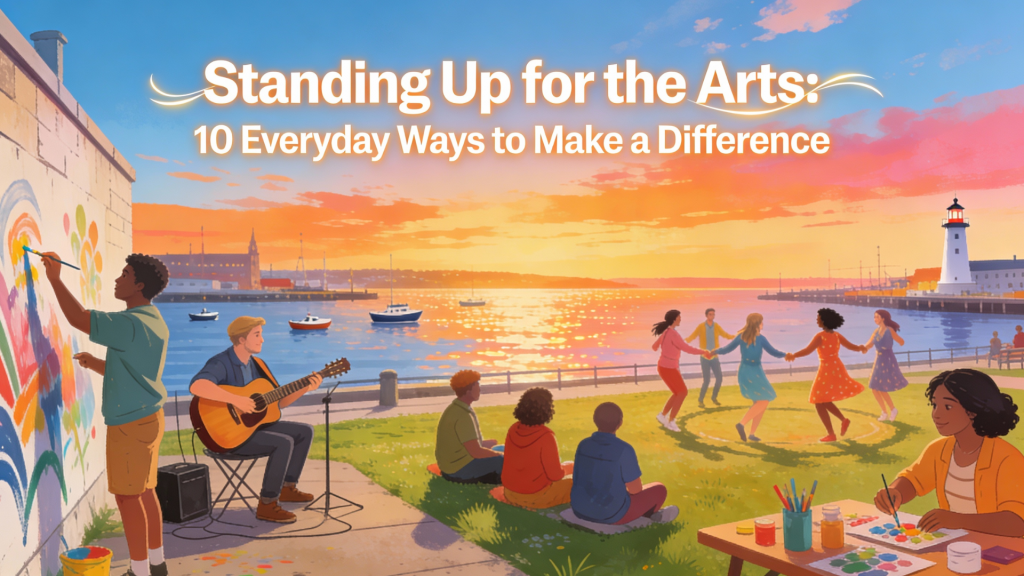
Arts funding in Nova Scotia is under constant pressure, but everyday Nova Scotians have real power to help push back and protect the culture that shapes our province. The arts do far more than entertain. They are deeply tied to community wellbeing, mental health, and overall quality of life in this province.
Across Nova Scotia, artists and arts organizations regularly face the threat of cuts at municipal, provincial, and federal levels, from proposed reductions in provincial arts grants to decades without meaningful operating increases for many groups. When funding is cut or frozen, it affects everything including artist incomes, community programs, arts education, and the cultural life that makes Nova Scotia unique.
At the same time, research shows that people who are engaged in arts and culture activities are more likely to rate their quality of life as high, and arts and culture are a measurable driver of quality of life. Arts-based health programs in communities and hospitals reduce stress, ease isolation, and support healing for seniors, patients, and caregivers.
However, for many Nova Scotians and Canadians, the question isn’t whether to support the arts, it’s how. How can one person, not working inside government or an arts organization, actually make a difference? The truth is, advocacy doesn’t always mean lobbying in Ottawa or the Nova Scotia Legislature. It can start at your kitchen table, on your phone, or in your neighbourhood.
Here are ten practical, everyday ways people in Nova Scotia can advocate for the arts and, in turn, help protect community wellness.
1. Share the stories that matter
The arts thrive when their impact is visible. Share your own story about how the arts have shaped your life. Maybe it’s a concert that moved you, a community project that connected neighbours, or a show that changed how you see the world. Tag local arts organizations or artists on social media. When sharing posts be sure to mention how you were positively impacted. Your story helps policymakers and the public see the ripple effect of the arts.
2. Tell your elected representatives that you care
Email or phone your local councillor, MLA, or MP. Let them know why arts funding matters to you personally. And thank them for any ongoing support. A genuine letter from a constituent can have far more weight than a form email. If you’re not sure what to write, many arts organizations have templates they can offer to you. And examples are also available online.
3. Bring the arts into election conversations
During election seasons, attend candidate debates or town halls and ask where they stand on arts and culture. Also ask questions about arts-in-health programming, and whether candidates support stable multi-year funding. Post clips or quotes online to keep the arts visible in the political conversation. Share candidates’ responses with your networks so others can see who is committed to supporting both cultural and community wellbeing.
4. Join forces with arts advocates
Collective voices amplify impact and has been proven to work in the past. Follow online or join local or national groups or community arts councils. These organizations coordinate advocacy campaigns and can help you plug into larger efforts. When they issue calls to write, sign, attend, or share, add your name and your story.
5. Support arts education
When arts get cut from school budgets, students lose out on creativity, confidence, and future career paths. Research shows that arts engagement is linked to higher quality of life, including for young people and families. Advocate for arts in schools by volunteering for arts events, donating supplies, or speaking up at school board meetings about why creative learning matters. Support after-school or community arts programs, especially those that focus on inclusion, wellness, and low-barrier access for youth.
6. Use your platforms with purpose
Your Instagram post or Facebook share can do more than promote a show, it can raise awareness about why the arts need support. Share stories of artists, link to petitions or campaigns, and remind people that their voices matter. Share posts about funding threats, petitions, and campaigns, but also about how arts events and programs have improved mental health, reduced isolation, or created community connection. Tag councillors, MLAs, MPs, and media when you share positive stories and calls to action, so they see the link between arts participation and wellbeing.
7. Give what you can even if it’s small
Many organizations are expanding how communities can give from $5 monthly memberships to community bonds and volunteer hours. Every contribution helps. If money’s tight, consider offering your skills through things like marketing help, photography, or even event setup. If you run or work in a business, consider partnering with local arts groups on sponsorships and partnerships or wellness-focused arts initiatives for staff and community.
8. Bring art into public life
Organize or attend events that connect art to everyday experiences. Things like community mural projects, pop-up shows, or dance wellness workshops. These events remind everyone that art isn’t a luxury, but rather it’s part of community wellbeing. When you experience a wellness benefit like reduced anxiety, greater connection, and a sense of hope, tell program organizers and funders, and include those benefits when you write to representatives.
9. Collaborate for broader impact
Advocacy grows stronger when sectors overlap. Partner with educators, health workers, small businesses, and local non-profits to create art-based projects that tackle shared challenges. Arts-based projects in health, social services, seniors’ care, and community development clearly show how creative work helps reduce isolation, support healing, and build resilient communities. These cross-sector collaborations make a strong case for protecting arts funding inside broader wellness and community budgets.
10. Make advocacy a habit, not a crisis response
Too often, advocacy only picks up when cuts are announced. Keep it ongoing by signing up for newsletters from arts organizations, sharing updates, and mentioning arts support in your workplace or community group. Steady, consistent advocacy builds long-term awareness. Build small habits. Start by sharing one arts-and-wellness story a month, write one letter a year, attend at least one council or community meeting where arts are on the agenda, and keep reminding others that arts funding is not just about entertainment. It’s about community building and people’s health and quality of life.
Arts funding in Nova Scotia may always feel like it is under threat, but that does not mean the outcome is fixed. When community members connect the dots between arts, community, wellness, and quality of life, and act on that connection in small, consistent ways, they help protect the creative heartbeat of our province.